Fire Island Pines Film Photography | Fire Island on Film
Fire Island Pines has long been a creative refuge for the LGBTQ community, known for its modernist beach houses, legendary Tea Dance, and decades of cultural history. In this personal essay, photographer Michele Hamparian reflects on discovering Tom Bianchi’s iconic Fire Island photographs and how they inspired her to begin shooting film in the Pines, documenting architecture, community, and moments of island life one frame at a time.
Photographing Fire Island Pines on Film
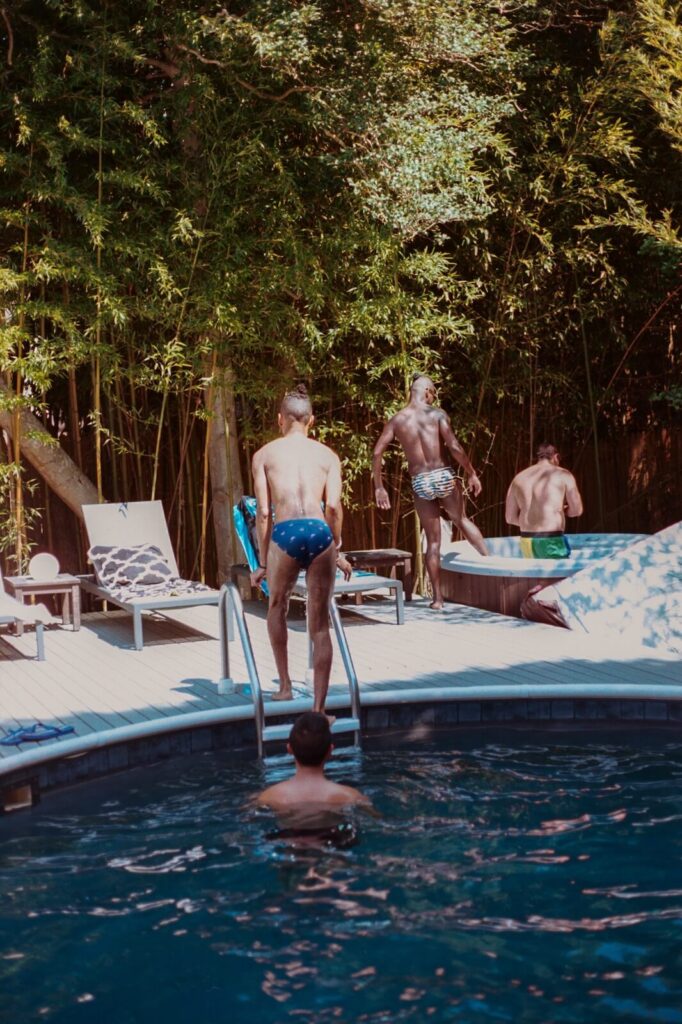
When I shoot film photography in Fire Island Pines, I am chasing something slightly different than light or architecture. I am chasing memory.
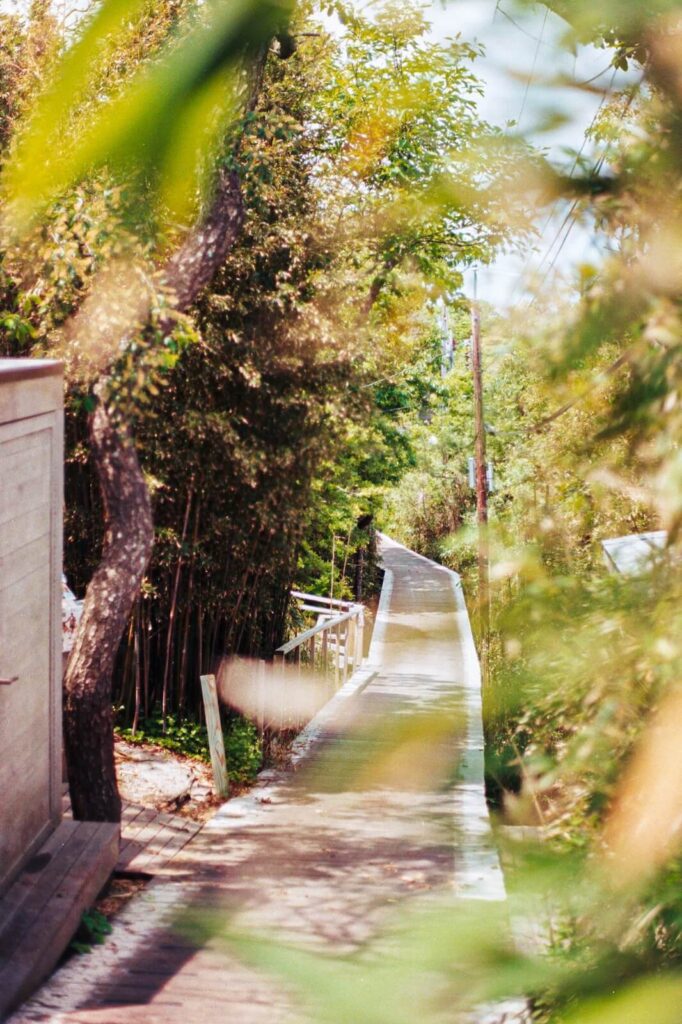
The Pines is one of those places where every boardwalk, every house, and every late afternoon cocktail seems to hold a story. Some of them are legendary. Others are quiet and personal. Shooting film there feels like the right medium because the Pines itself already exists somewhere between the past and the present.
Since the 1950s, Fire Island Pines has been a refuge and creative playground for the LGBTQ+ community. Writers, performers, and artists found something here that was harder to find in the city at the time. Truman Capote spent summers walking these same boardwalks. Judy Garland, Bette Midler, and Madonna all found their way here at different moments in the Pines’ cultural story.
One of the traditions that still defines the rhythm of the Pines started in 1966 when John Whyte created the Tea Dance at the Blue Whale. What began as a simple afternoon gathering became one of the most iconic rituals of the community. Music in the afternoon sun, people arriving from the beach still covered in salt water, and friends greeting each other like they had never left.
The Pines has always been about expression, freedom, and a certain kind of joy that feels specific to this narrow stretch of barrier island.
Discovering the Pines
I first started spending summers in the Pines about ten years ago. My earliest seasons were spent at the Bay House, and those summers are some of my most formative memories.
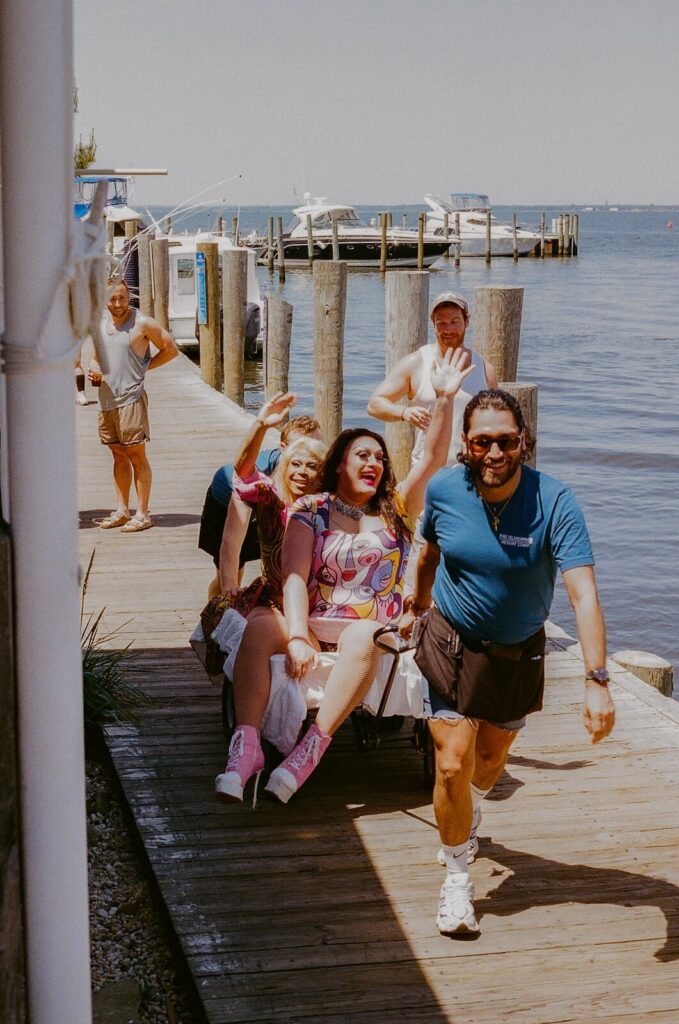
At that time I was still figuring out who I was and where I fit within the community. The Pines has a way of accelerating that process. When you arrive, you are surrounded by people who seem completely themselves. Stunningly dressed men walking to dinner in linen shirts, people dancing in the middle of the afternoon, drag queens arriving to brunch like they just stepped off a stage.
Your first instinct is to assume everyone has always been that confident.
But the Pines also has another tradition that people sometimes miss. If you sit long enough at the earlier cocktail hours, especially at places like Sip n Twirl before the night crowds arrive, you begin to hear the stories.
Men who lived through the 1980s and 1990s. Stories about coming out to families who did not understand. Stories about losing friends. Stories about finding community in places like the Pines when much of the country felt hostile.
I remember sitting and listening to those conversations and realizing how much of our current freedom grew out of those experiences.
For many people, the Pines was where that freedom could finally exist in the open.
The Architecture That Inspired My Photography
Before I started shooting film regularly, I was already photographing homes in the Pines for real estate. Spending summers documenting these houses meant I was constantly walking through some of the most unique architecture on the East Coast.
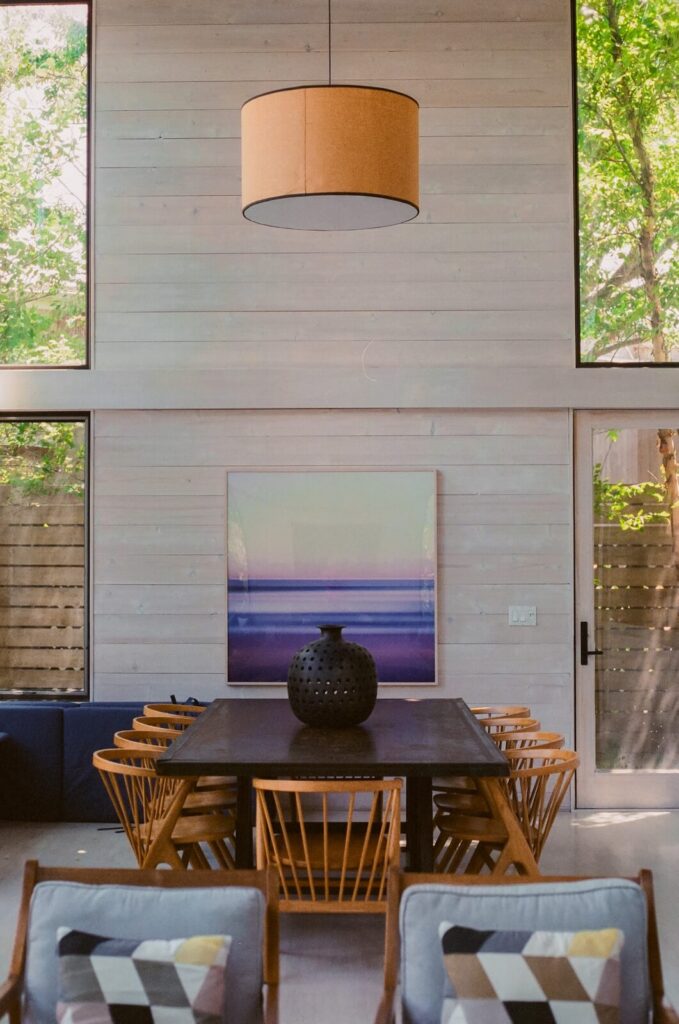
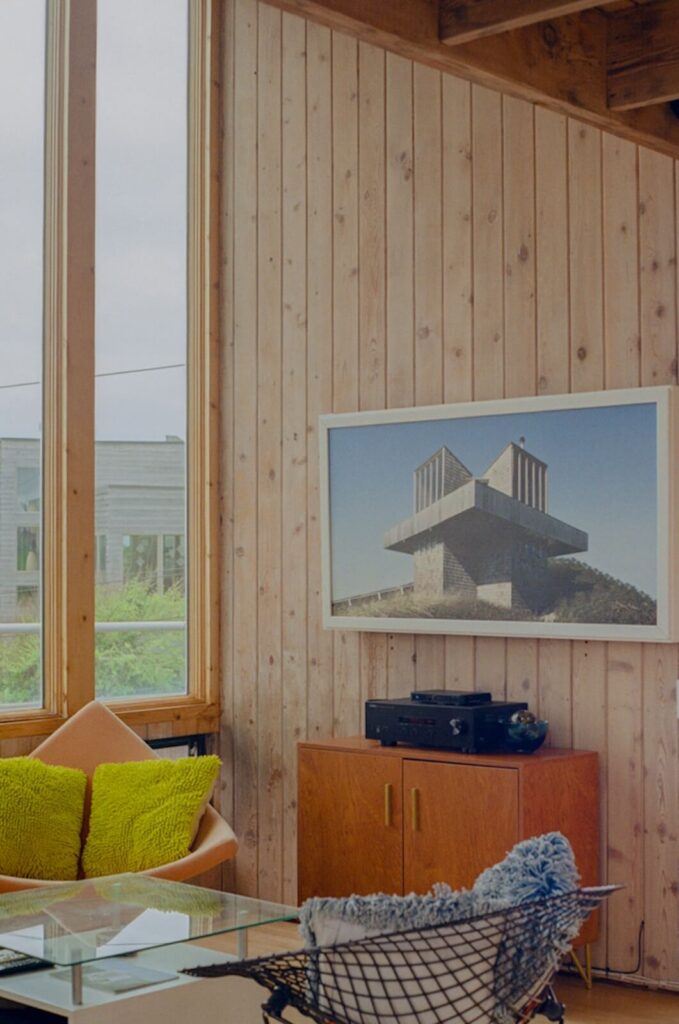
Many of the homes in Fire Island Pines were built during the 1960s and 1970s when architects began experimenting with modernist designs that blended directly into the natural landscape. Elevated decks, dramatic rooflines, and large glass walls that bring the surrounding pine trees inside. Even today the homes still feel distinctly tied to that era.
Many of these homes feel like they belong to another era, yet they are still alive with parties, dinners, and weekends filled with friends.
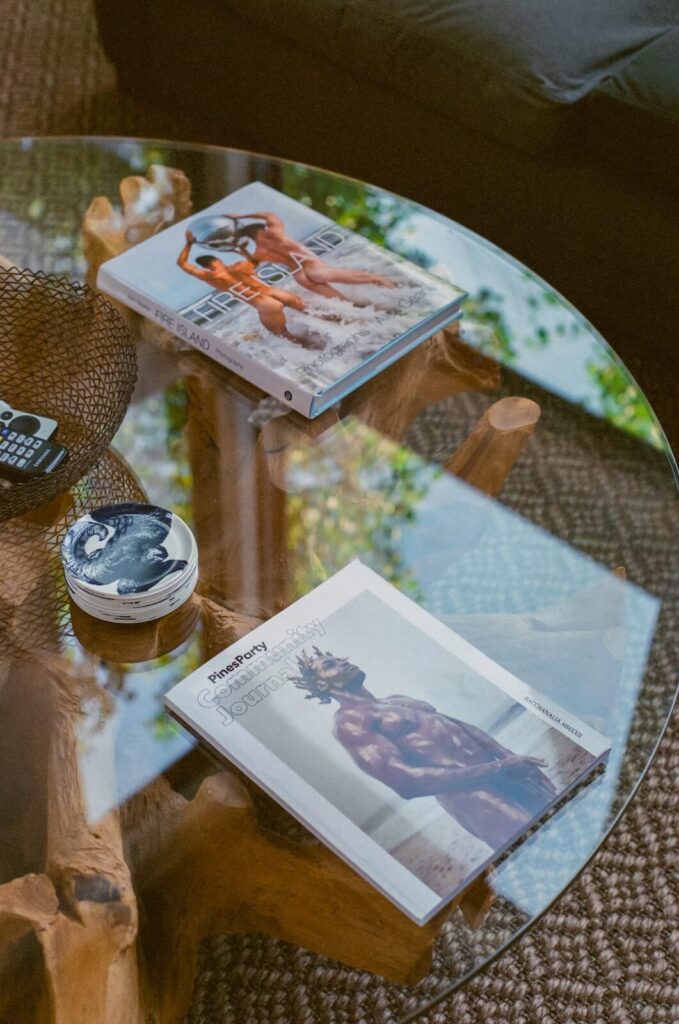
At some point during those summers I kept noticing the same photography book sitting on coffee tables throughout the Pines.
Tom Bianchi.
Almost every house seemed to have a copy of his book. Eventually I picked one up and started flipping through it.
His photographs document life in Fire Island Pines during the 1970s and 1980s. Friends lounging in the sun, people gathered on decks overlooking the bay, quiet mornings after long nights. The images feel joyful and relaxed, like everyone exists in a small paradise surrounded by people they love.
Many of these photographs were shot using a Polaroid SX-70, which gave the images their soft square format and slightly dreamy tones. What struck me most was that these photographs captured everyday moments during some of the most difficult years to be a gay man in America. Yet the images are filled with friendship, laughter, and community.
Every frame tells a story.
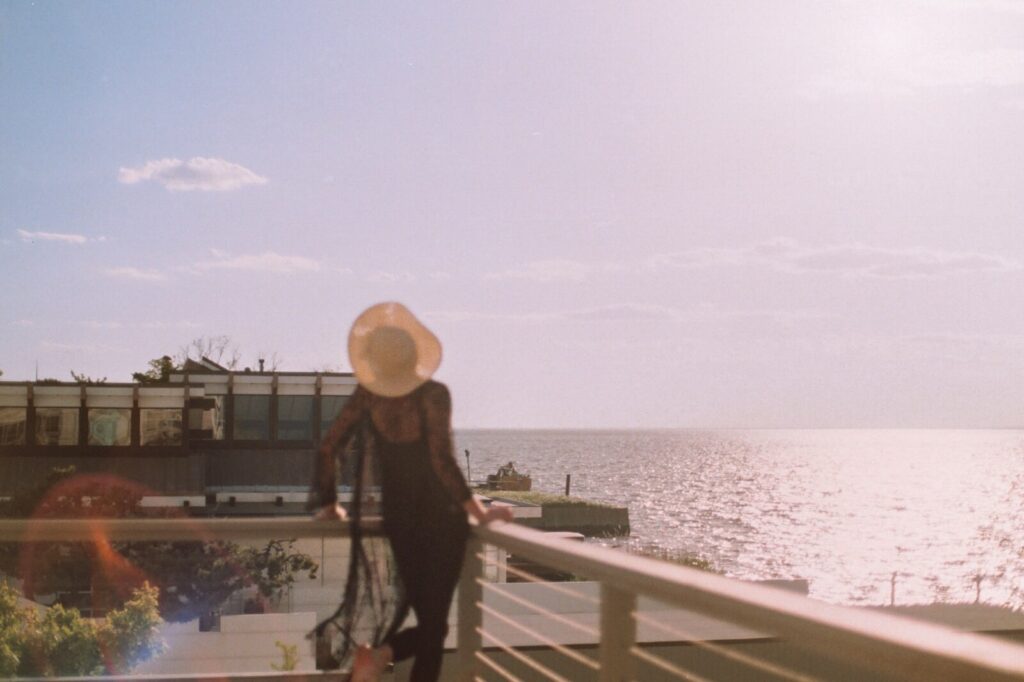
Seeing those photographs was one of the first moments I started thinking seriously about shooting film myself. The Pines still carries that same vintage character. The architecture, the boardwalks, the late afternoon light filtering through the trees. Shooting it digitally never quite captured that atmosphere the way film could.
Looking through those images made me realize something important. Photography in the Pines has always been about documenting community just as much as it is about documenting place. In a way, picking up my own film camera felt like continuing a visual tradition that had already existed here for decades.
My Own Pines Stories
Everyone who spends enough time in the Pines collects stories.
Some are funny. Some are chaotic. Some are unexpectedly meaningful.
I remember doing a full performance of “Don’t Rain on My Parade” from Funny Girl in the living room of a friend’s share house one summer night. A room full of older gay men cheering me on like it was opening night on Broadway.
Moments like that are part of why I fell in love with the Pines in the first place.
There were also the slightly more ridiculous adventures. Like the time my friends and I tried to sneak into the Belvedere, which is famously men only. We made it almost to the outside before someone yelled at us and we ended up walking the beach all the way back from Cherry Grove in the rain.
At the time it felt dramatic and hilarious.
Now I just pay for the water taxi.
Bloody Marys also hit very differently than they did when I was twenty.
One of my favorite parts of the Pines is still the conversations with the older generation. Listening to stories about what life was like in the city decades ago and how much the community had to fight to create spaces like this.
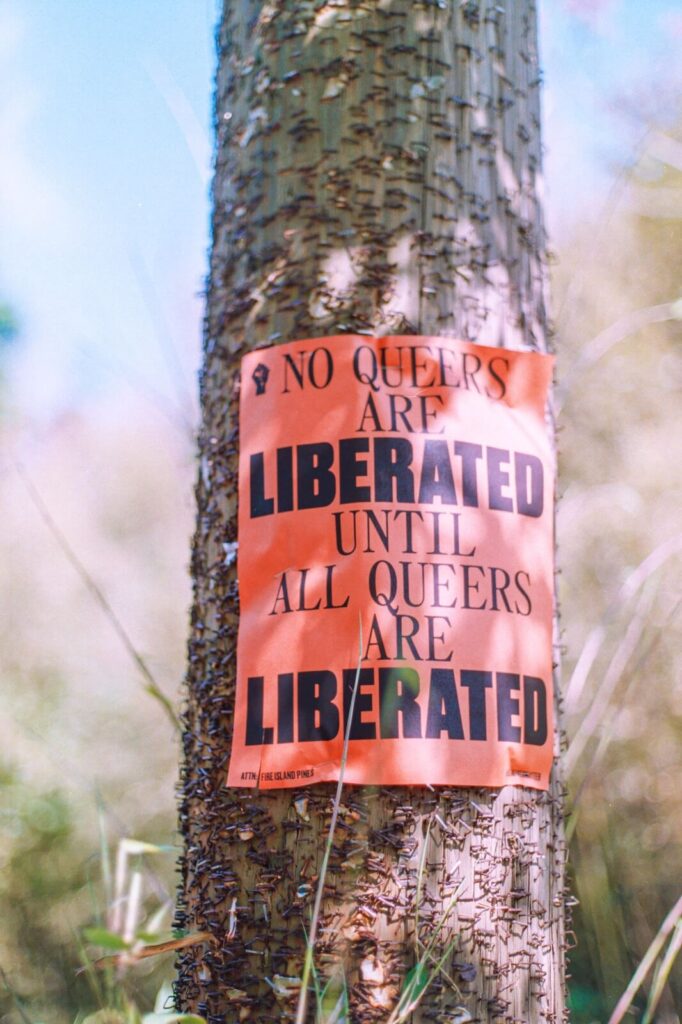
So much of the self expression you see today started in places like the Pines long before it became normal in the rest of New York.
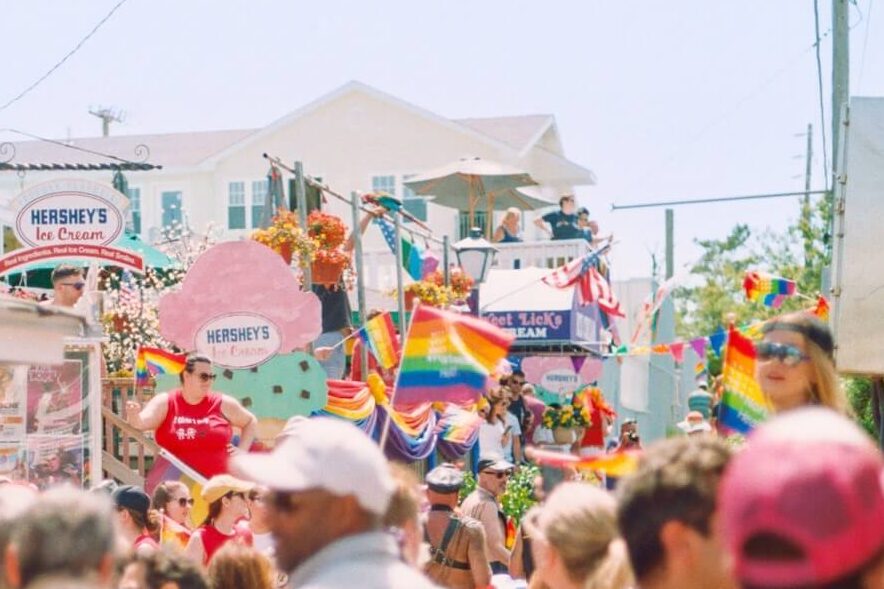
Crowd gathering at the Blue Whale deck during late afternoon Tea Dance with people dancing and laughing in the sun.
Why Film Feels Right Here
Digital photography is fast and efficient. Film forces you to slow down.
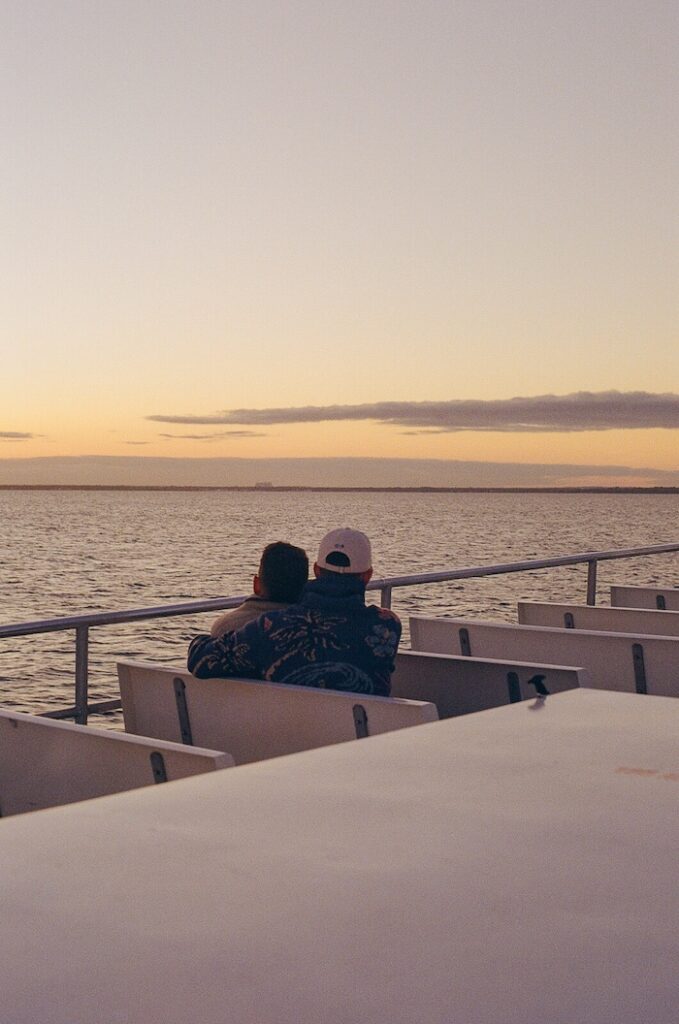
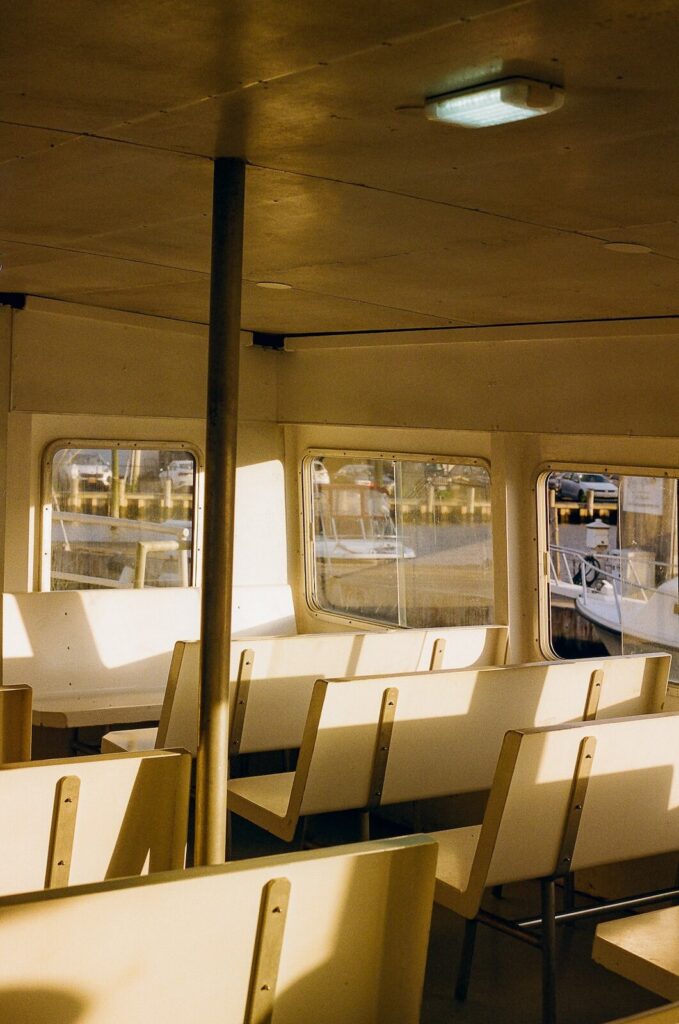
In a place like Fire Island, slowing down is part of the experience. The ferry ride separates the island from the city. The boardwalk replaces cars. People walk instead of rushing.
Film fits naturally into that rhythm.
Each frame becomes a small document of a moment that might otherwise disappear. A house glowing in late afternoon light. Friends sitting around a table covered in empty glasses. Someone dancing barefoot on a wooden deck.
The Pines has always existed somewhere between history and the present. Shooting it on film helps preserve that feeling.
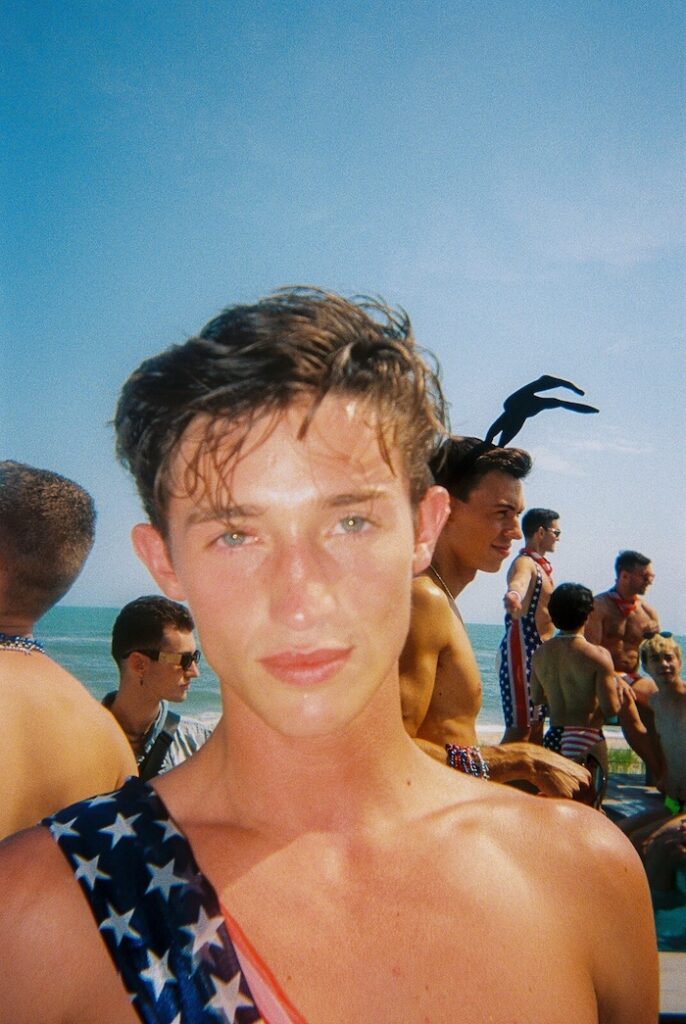
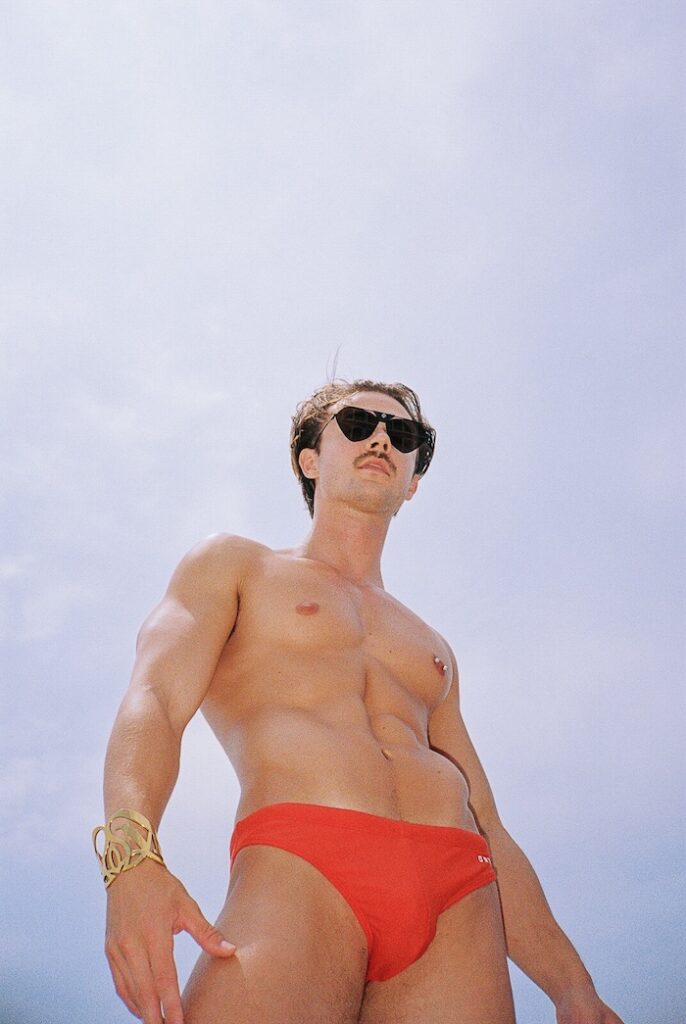
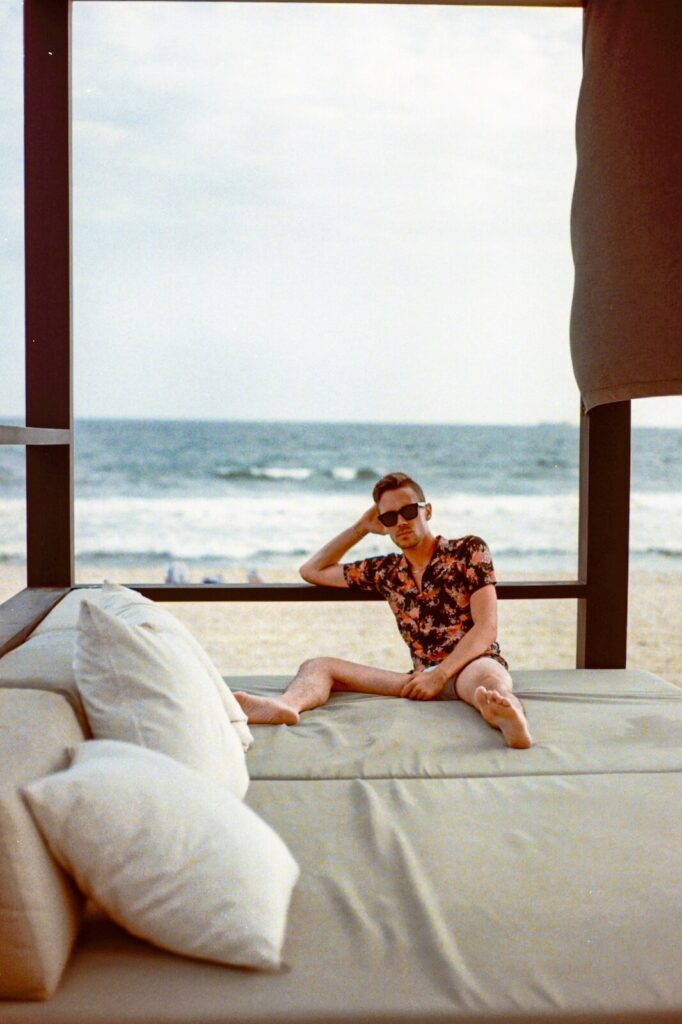
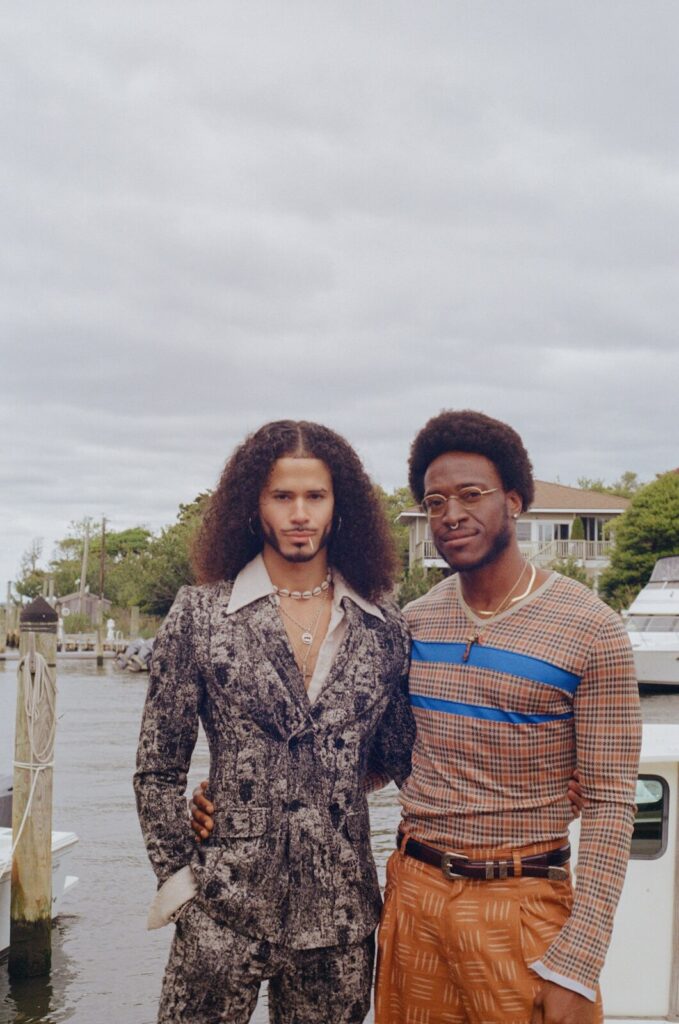
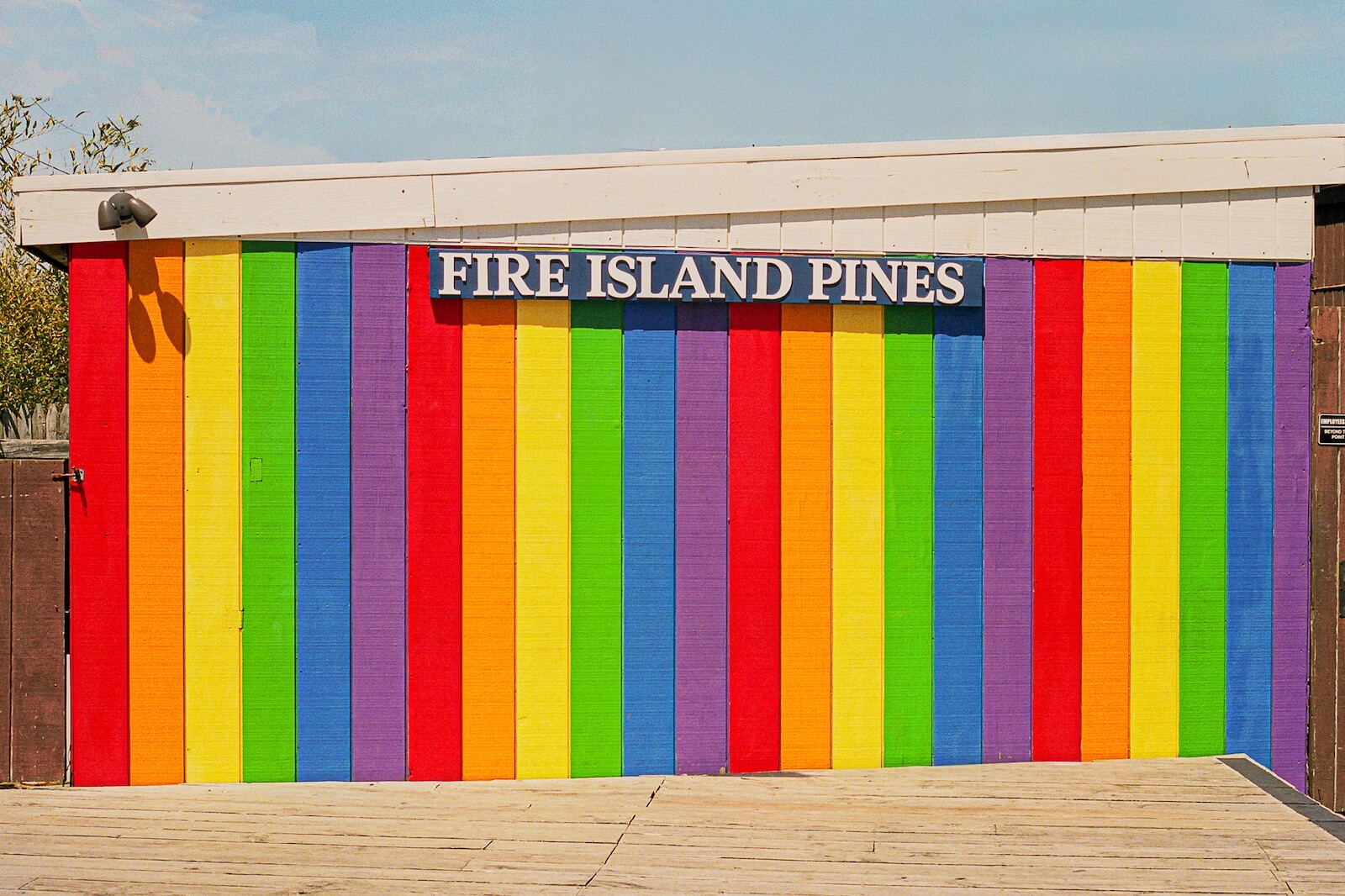
The photos in this post were shot on film and developed later, long after the weekend ended. Looking at them now feels like opening a small time capsule.
Fire Island Pines has long been a creative refuge for the LGBTQ community, known for its modernist beach houses, legendary Tea Dance, and decades of cultural history. In this personal essay, photographer Michele Hamparian reflects on discovering Tom Bianchi’s iconic Fire Island photographs and how they inspired her to begin shooting film in the Pines, documenting architecture, community, and moments of island life one frame at a time.
When I shoot with my Canon AE-1, I am always chasing light and structure. Both Fire Island and Palm Springs have a strong sense of design, but in completely different ways.
Discover More Editions
Explore the full collection of open edition film prints — inspired by light, color, and everyday